Showing posts with label Kepler-90. Show all posts

Tuesday, April 18, 2017

HD 219134 Scorecard: 5 planets, 2 transiting


Figure 1. Architecture of the mixed-mass planetary system around HD 219134, a nearby K dwarf, as characterized by Gillon et al. 2017 and Johnson et al. 2016. All five planets are shown at their approximate relative sizes. Planets b and c are observed in transit, so their radii are known. The radii of the other planets are based on those of planets with similar masses and measured radii (e.g., planets d and e are assigned the same radii as Neptune and Saturn, respectively). See Table 1.
----------
Fresh from their discovery of four new Earth-size planets transiting TRAPPIST-1 (a minuscule M dwarf in the Sun’s back yard), Michaël Gillon & colleagues have contributed exciting new data to our developing picture of another nearby exoplanetary system: HD 219134. The host star is a metal-rich K3 dwarf located only 6.55 parsecs away (21 light years) in the direction of Cassiopeia. Gillon & colleagues confirm a previous report by Motalebi & colleagues (blogged here) that the innermost planet (b) is visible in transit, while announcing that the second planet (c) also transits. In addition, they present radial velocity masses for both transiting planets (hereafter tranets), as well as a refined radius for planet b. For both objects, these values are consistent with a purely rocky composition.

After the 2015 announcement by Motalebi & colleagues (hereafter M15), two subsequent studies offered additional data and analyses of the HD 219134 system: Vogt & colleagues (hereafter V15, blogged here) and Johnson & colleagues (hereafter J16, blogged here). Many findings from these studies overlap, but others are mutually inconsistent, including results on the precise number of planets and their approximate masses and periods. Nonetheless, all three studies agreed that HD 219134 hosts two or more low-mass planets on hot and warm orbits, plus one gas giant less massive than Saturn outside the system ice line.

In their new study, Gillon & colleagues confine their attention to the inner system, where they identify a total of four low-mass planets. This result contrasts with the three small planets proposed by M15 and the five preferred by V15. Along with their transit findings, Gillon’s group also report the latest radial velocity data on all four planets from continuing observations with the HARPS-N spectrograph. In passing, they affirm the presence of the giant planet but do not comment on the conflicting results of the earlier studies. Table 1 summarizes their findings on planets b through f, supplemented by the findings of J16 on planet e (which J16 called planet h, even though no one has proposed as many as seven planets – i.e., b through h – for this system).

Table 1. Revised system parameters of HD 219134

Tags: Period = orbital period in days; a = semimajor axis in astronomical units (AU); Radius = radius in Earth units; Mass = mass in Earth units; Teq = equilibrium temperature in Kelvin. Data on planet e are based on those for planet h in Johnson et al. 2016. All other data are based on Gillon et al. 2017.

-----------------------------
conflicts resolved?

We’ve now seen four successive studies of HD 219134 conducted by three different scientific teams. (I regard Gillon et al. 2017 as the same team as M15, since the two author groups overlap substantially and both report HARPS-N data.) Our picture of planet b is largely unchanged from the results of M15 and V15, except that we have a firmer understanding of its radius. With the new transit data and improved radial velocity data on planet c, we can also be confident of that planet’s mass, radius, and density, with no change in its estimated period. Even planet d retains virtually the same period reported by M15 and V15, although its mass falls between the values they provided.

Although planet f was not included in the analysis of M15, and a potential planet with a similar periodicity was rejected by J16, the object reported by Gillon & colleagues looks a lot like the planet f proposed by V15: its period is virtually the same, while its mass is a bit lower – a minimum of 7.3 Earth masses (7.3 Mea) instead of 8.9 Mea. Notably, the newly published period of planet f appears to place it just outside a 2:1 mean motion resonance with planet d. Similar period ratios have appeared in several compact low-mass systems discovered by the Kepler Telescope.

Consistent with M15 and J16, Gillon & colleagues implicitly reject V15’s proposed planet g at 94 days. They remain silent on the parameters of the system’s gas giant, to which J16 assign a period of almost 6 years and a semimajor axis of about 3 AU.

mass distribution

The new data suggest that HD 219134 harbors a substantial mass in refractory elements within a space much smaller than the region bounded by Mercury’s orbit in our system (see Table 1). Gillon & colleagues argue that the two innermost planets, b and c, have minimal volatile constituents, with radial velocity data indicating a combined refractory mass of about 9 Mea for this pair. Although we remain ignorant of the radii of the next two planets, f and d, most exoplanets with comparable masses (in the approximate range of 5 to 20 Mea) and comparable thermal environments (cooler than Venus) support substantial envelopes of hydrogen and helium. Existing studies suggest that the bulk mass composition of such planets is generally between 1% and 30% hydrogen/helium (see Lopez & Fortney 2014). Therefore, given their combined radial velocity masses of 23.5 Mea, we can estimate an aggregate mass of 16-22 Mea in refractory elements for this cooler, fatter pair, with hydrogen and other volatiles accounting for the remaining 1-7 Mea. That brings the total refractory mass of the four inner planets into the range of 25-31 Mea.

Altogether, the radial velocity data indicate a total mass of about 33 Mea for the inner system of HD 219134, placing it in roughly the same ballpark as the aggregate mass of the six-planet systems around Kepler-11 (about 30 Mea) and Kepler-20 (about 55 Mea). All these endowments are much richer than the aggregate mass of the four terrestrial planets in our Solar System, which collectively sum to 1.98 Mea. 

stingy spitzer scheduling

The late, lamented Kepler Mission demonstrated the need to collect continuous photometric data over a period of years in order to characterize the inner reaches of any planetary system. The longer the sequence of light curves, the more robust the resulting analysis of potential transits. In light of that history, I was surprised to learn that Gillon’s group was able to observe only two transits each for planets b and c. Their observing sessions with the Spitzer Space Telescope were confined to periods of 6.5 to 7.5 hours centered on the transit window predicted for each planet. As a result, we have no idea whether any of the other planets orbiting HD 219134 can be observed in transit. Definitive findings one way or the other would dramatically improve our understanding of this system’s distinctive architecture and constrain the degree of coplanarity among the orbits of the inner planets

Notably, Spitzer had to monitor TRAPPIST-1 for 20 consecutive days in order to untangle the orbits of its seven known planets, and even that allotment was too brief to obtain a clear picture of the outermost planet, which has a period just shy of 19 days. To illuminate the inner system of HD 219134 would require an observing run in excess of 200 days – evidently an impossibility at present. What we humans need is a whole array of space-based observatories staring year after year at all the most interesting stars in our neighborhood.

architecture and habitability

As I discussed in an earlier post on HD 219134, this system can be characterized as a “rich mixed-mass system,” defined as a planetary system with at least two low-mass planets plus at least one gas giant on a wider orbit. Including our Solar System, about a dozen such configurations are known. They share important similarities. In most of them – including HD 219134 – two or more low-mass planets are observed in transit, while the gas giant tends to be the outermost of the known planets. (The exceptions to the latter generalization are Kepler-87, Kepler-89, and the Solar System, each of which includes a gas giant with a low-mass planet on an exterior orbit.)

In more than half of the known systems –Kepler-48, Kepler-68, Kepler-87, Kepler-167, HD 219134, HD 10180, and our Solar System – we note a gap between the inner system of low-mass planets and the outer gas giant. Except for our own system, we can’t be sure whether any of these apparent gaps is truly empty. Some might be occupied by one or more planets that are misaligned with the others, and thus not visible in transit, or hiding a planet or planets that are too lightweight for radial velocity observations to detect.

In any case, such gaps are significant, because in HD 219134 and several other systems, they correspond to the classical habitable zone. That’s why I’d like to see lots of follow-up observations of HD 219134, accompanied by analyses of the orbital stability of potential Earth-mass planets occupying the space between 0.5 and 1 AU. Three such analyses have already been conducted for the habitable zone of HD 10180, with conflicting results (as blogged here).

beware of outsiders

Equally significant is the mechanism responsible for creating and maintaining these orbital gaps. The difficulty of identifying such a mechanism is underscored by the case of our Solar System, where we still have no widely endorsed scenario to explain why mass is severely depleted between the orbits of Earth and Jupiter, and altogether absent between the orbits of Mars and the Main Belt asteroids. Jupiter is probably involved, but the details are elusive (see Batygin & Laughlin 2015, Raymond et al. 2016). 

The question of orbital gaps and missing mass in this subset of system architectures is subsumed by a more general concern regarding the role of longer-period gas giants in systems with multiple low-mass planets on hot or warm orbits. Several recent studies have addressed the stability of compact multiplanet systems in the presence of an outer giant, whether seen or unseen (Hands & Alexander 2016, Hansen 2017, Becker & Adams 2017, Huang et al. 2017, Jontof-Hutter et al. 2017, Read et al. 2017). The results suggest that “friendly” giants, meaning those permitting the survival of several small, closely spaced planets, need to be cool in more ways than one. Not only must they follow orbits well-separated from the inner planets, in regions where insolation and equilibrium temperatures are lower; they must also be dynamically cool, with minimal eccentricities (deviations from circularity) and inclinations (deviations from coplanarity).

The most delicately balanced configuration – and thus the one most easily upset – contains several planets continually observable in transit. This balance can be maintained only a) if no gas giant is present or b) if the giant is either precisely aligned with the inner ensemble or very widely separated from it. Higher values of eccentricity, inclination, and mass, as well as lower values of semimajor axis, will lead to perturbations of the inner planets. In a perturbed regime, their inclinations might oscillate, such that transits periodically cease for certain planets and then resume after an interval, or become permanently misaligned, such that only one planet, or none at all, is observed in transit. In cases of extreme excitation of inclinations and eccentricities, some or all of the inner planets would be lost altogether.

For example, Becker & Adams found that, among 18 Kepler systems with at least 4 transiting planets each, potential gas giant companions would have to maintain semimajor axes of 10 AU or more to avoid perturbing the inner planets. They also made more specific predictions for several interesting systems featured in previous blog posts: WASP-47, Kepler-11, Kepler-62, Kepler-90, and Kepler-20.

The inner system of WASP-47 consists of a gas giant flanked by two low-mass planets inside a semimajor axis of 0.10 AU; the outer system contains another gas giant at 1.36 AU. Becker & Adams concluded that the orbit of the outer giant must be approximately coplanar with those of the inner tranets, or else they would become mutually misaligned and no longer be observable in transit. For Kepler-11, Kepler-62, and Kepler-20, their conclusions were even more restrictive: none of these systems could harbor an additional planet of 30 Mea or more between 1 and 30 AU without upsetting the clockwork orbits of the inner tranets. (Notably, Jontof-Hutter & colleagues reached a less restrictive conclusion for Kepler-11, ruling out any slightly inclined Jupiter-mass planets within 3 AU.) For Kepler-20, a total of six low-mass planets are known, but only five are observed in transit, given the misalignment of planet g. Becker & Adams propose that an undetected gas giant on a cool orbit might be responsible for this configuration.  

In an analogous study, Read & colleagues investigated the stability of systems containing short-period tranets and non-transiting giants at larger semimajor axes, including two rich mixed-mass systems, Kepler-48 and Kepler-68. For Kepler-48, they concluded that the outer giant must be closely aligned with the inner system, whereas for Kepler-68, available data provided no strong constraints on inclination.

The upshot of this group of studies is that compact inner systems of low-mass planets can typically tolerate cool giants only when the latter are well separated and well aligned. Accordingly, Brad Hansen included an evocative short title for his recent article on the stability problem: Beware of Outsiders. Once we have more data on HD 219134, comparable analyses should be able to constrain the alignment of planet e.

tranets in near space

HD 219134 now warrants a throng of superlatives: it’s the nearest star with a tranet of any description, the nearest Sun-like star with a tranet, the nearest with more than one tranet, the nearest with a terrestrial tranet, and the nearest with more than one terrestrial tranet. In order of increasing distance from the Sun, its closest rivals are Gliese 436 at 10.2 parsecs (one hot tranet more massive than Neptune), Gliese 1132 at 12 parsecs (one hot terrestrial tranet), TRAPPIST 1 at 12.1 parsecs (seven terrestrial tranets), 55 Cancri at 12.3 parsecs (one very hot, massive terrestrial tranet), LHS 1140 at 12.47 parsecs (one temperate terrestrial tranet), Gliese 1214 at 13 parsecs (one hot, puffy tranet about half the mass of Uranus), HD 189733 at 19.2 parsecs (one transiting Hot Jupiter), HD 97658 at 21 parsecs (one hot tranet more massive than Neptune), Gliese 3470 at 29 parsecs (one hot Uranus-mass tranet), HAT-P-11 at 38 parsecs (one hot tranet more massive than Neptune), and Kepler-42 at 39 parsecs (three warm terrestrial tranets in the nearest Kepler system). All the more distant tranets are either Hot Jupiters or low-mass planets discovered by space-based telescopes (Kepler and CoRoT).

Among the 12 transiting systems located within 40 parsecs (130 light years), only one includes a transiting gas giant on a hot orbit (HD 189733), a reminder that the well-known species of Hot Jupiters is actually quite rare. More than half of these nearby transiting systems center on M dwarfs, while only two systems with rocky tranets orbit Sun-like stars (HD 219134 and 55 Cancri). Coincidentally or not, these two are also the only mixed-mass systems in the group.

Given so many superlatives and distinctions, it’s safe to predict that we’ll be hearing more news from HD 219134 for years to come.


REFERENCES
Batygin K, Laughlin G. (2015) Jupiter’s decisive role in the inner Solar System’s early evolution. Proceedings of the National Academy of Sciences 112, 4214-4217. Abstract: 2015PNAS..112.4214B
Becker JC, Adams FC. (2017) Effects of unseen additional planetary perturbers on compact extrasolar planetary systems. Monthly Notices of the Royal Astronomical Society 468, 549-563. Abstract: 2017MNRAS.468..549B
Gillon M, Demory B-O, Van Grootel V, Motalebi F, Lovis C, Collier Cameron A, Charbonneau D, Latham D, Molinari E, Pepe FA, Ségransan D, Sasselov D, Udry S, Mayor M, Micela G, Piotto G, Sozzetti A. (2017) Two massive rocky planets transiting a K-dwarf 6.5 parsecs away. Nature Astronomy 1, 56. Abstract: 2017NatAs...1E..56G
Hands TO, Alexander RD. (2016) There might be giants: unseen Jupiter-mass planets as sculptors of tightly packed planetary systems. Monthly Notices of the Royal Astronomical Society 456, 4121-4127.
Hansen B. (2017) Perturbation of compact planetary systems by distant giant planets. Monthly Notices of the Royal Astronomical Society, 1531-1560. Abstract: 2017MNRAS.tmp..186H
Huang CX, Petrovich C, Deibert E. (2017) Dynamically hot Super-Earths from outer giant planet scattering. Astronomical Journal 153, 210.
Johnson MC, Endl M, Cochran WD, Meschiari S, Robertson P, MacQueen PJ, Brugamyer EJ, Caldwell C, Hatzes AP, Ramírez I, Wittenmyer RA. (2016) A 12-year activity cycle for the nearby planet host star HD 219134. Astrophysical Journal 821, 74. Abstract: 2016ApJ...821...74J
Jontof-Hutter D, Weaver BP, Ford EB, Lissauer JJ, Fabrycky DC. (2017) Outer architecture of Kepler-11: Constraints from coplanarity. In press. Abstract: 2017arXiv170308829J
Motalebi F, Udry S, Gillon M, Lovis C, Ségransan D, Buchhave LA, Demory BO, Malavolta L, Dressing CD, Sasselov D, Rice K, Charbonneau D, Collier Cameron A, Latham D, Molinari E, Pepe FA, Affer L, Bonomo AS, Cosentino R, Dumusque X, .Figueira P, Fiorenzano A, Gettel S, Harutunyan A, Haywood RD, Johnson J, Lopez E, Lopez-Morales M, Mayor M, Micela G, Mortier A, Nascimbeni V, Philips D, Piotto G, Pollacco D, Queloz D, Sozzetti A Venderburg A, Watson CA. (2015) The HARPS-N Rocky Planet Search I. HD 219134 b: A transiting rocky planet in a multi-planet system at 6.5 pc from the Sun. Astronomy & Astrophysics 584, A72. Abstract: 2015A&A...584A..72M
Raymond SN, Izidoro A, Bitsch B, Jacobson SA. (2016) Did Jupiter’s core form in the innermost parts of the Sun’s protoplanetary disk? Monthly Notices of the Royal Astronomical Society 458, 2962-2972. Abstract: 2016MNRAS.458.2962R
Read MJ, Wyatt MC, Triaud AH. (2017) Transit probabilities in secularly evolving planetary systems. Monthly Notices of the Royal Astronomical Society. In press. Abstract: 2017arXiv170310046R
Vogt SS, Burt J, Meschiari S, Butler RP, Henry GW, Wang S, Holden B, Gapp C, Hanson R, Arriagada P, Keiser S, Teske J, Laughlin G. (2015) A six-planet system orbiting HD 219134. Astrophysical Journal 814, 12. Abstract: 2015ApJ...814...12V


Wednesday, April 27, 2016

HD 219134: Take Three


Figure 1. Analyses of longitudinal radial velocity data by Johnson & colleagues have confirmed three planets orbiting HD 219134, a small Sun-like star of spectral class K3 located at a distance of only 6.53 parsecs (21 light years). Additional low-mass planets were reported in this system by Motalebi & colleagues (2015) and Vogt & colleagues (2015), but Johnson’s group had insufficient data to confirm or reject those candidates. In the figure, the planets colored aquamarine (b, d) are supported by Johnson et al. 2016, Motalebi et al. 2015, and Vogt et al. 2015; the large blue planet (e (h)) is supported by Johnson et al. 2016 and Vogt et al. 2015; and the orange planet (c) is supported by Motalebi et al. 2015 and Vogt et al. 2015

------------------------------

I love science! Replication of results, falsification of invalid hypotheses! Teams of scientists working on singular questions, converging on robust answers, shining the light of understanding on the farthest reaches of the universe!

Or at least that’s the ideal.

Since last summer, we’ve seen science in action around HD 219134, an appealing amber star of 0.78 Solar masses (0.78 Msol) located very nearby in the northern constellation of Cassiopeia. That star and its planetary system have been featured in three previous blog posts (here, here, and here), which record unfolding developments both in the number of the reported planets and in the most appropriate characterization of the system architecture.

Two major studies last year presented conflicting analyses based on two different datasets. Motalebi & colleagues (2015; hereafter M15) proposed a four-planet architecture comprising three low-mass planets inside 0.25 AU and a gas giant of 0.19 Mjup (62 Mea) just outside 2 AU. In order of distance from the star, the planets were designated b through e. Almost simultaneously, Vogt & colleagues (2015; hereafter V15) proposed a six-planet architecture with five low-mass planets inside 0.4 AU and a gas giant of 0.34 Mjup (108 Mea) just outside 3 AU. In the manuscript circulated before publication, these six were designated b through g in order of distance from the star, but on publication they were renamed b through h without reference to their distance, omitting e altogether (perhaps reserving that letter for the planet reported by M15?). M15 also proposed a rotation period of 42.3 days for the host star, while V15 proposed a period of approximately 20 days.

Now a third team, one of whose members (Meschiari) also participated in V15, has weighed in on this system (Johnson et al. 2016; hereafter J16). Most of the authors are based at the University of Texas at Austin and involved in the McDonald Observatory Planet Search. A key strength of this work is its radial velocity coverage, which spans 27 years. Another is its data on stellar activity, which span 17 years and were obtained by the Keck/HIRES spectrograph. A third strength is the analytical acumen of the investigative team, which includes Artie Hatzes and Paul Robertson. A notable limitation, as the authors concede, is the low precision of the radial velocity data, which did not permit definitive results regarding any of the proposed low-mass planets apart from the innermost, planet b (see Figure 1).

The most direct contribution of J16 is their finding that HD 219134 has a stellar activity cycle with a period of 11.6 years. This is very similar to the 11-year cycle of our Sun, which manifests in the ebb and flow of sunspots on the Sun and auroras on Earth. Identifying this cycle in HD 219134 assisted the analysis of the radial velocity data, enabling J16 to rule out systematic effects originating in stellar activity. However, they were unable to determine the star’s rotation period, which is essential for a robust data analysis.

As the authors note, a star’s rotation has a critical relationship with its age. For HD 219134, a period of about 20 days would imply an age of about 1.3 billion years. Notably, V15 reported a period of 22.8 days for their planet f – very close to their estimate of the stellar rotation period. A period of 42.3 days, as reported by M15, would imply an age of 4.1 billion years, making the star a bit younger than our Sun. J16 favor a period similar to M15’s estimate, which they say is most consistent with the stellar activity data.

Table 1. Summary of findings on the HD 21934 planetary system

Tags: P = approximate periodicity in days; PL = planet designation; d = reported period in days; Mea = reported mass in Earth units; a = semimajor axis in astronomical units (AU; Earth’s semimajor axis = 1 AU); e = orbital eccentricity.
-----------------------------

In broad terms, J16 support M15’s analysis of the low-mass planets in the inner system and V15’s analysis of the gas giant in the outer system (Table 1).

In the inner system, J16 had no difficulty recovering a signal corresponding to planet b, which was characterized by M15 and V15 as a planet less massive than 5 Mea with a period just over 3 days. J16 also recovered periodicities at 22.8 days and 79.1 days, but they concluded that both signals were caused by stellar rotation (as an alias or harmonic of the period) rather than by planets. They were much more confident of another signal at about 47 days, which corresponds to planet d in the models of M15 and V15. However, the two earlier studies provided conflicting estimates of this object’s minimum mass, with M15 proposing 8.67 Mea and V15 proposing 21.3 Mea. J16 did not comment on this candidate’s mass.

J16 also failed to recover any periodicity corresponding to planet c. Nevertheless, both M15 and V15 characterized this object in very similar terms, while J16 noted that their own radial velocity precision was significantly lower than that of the two earlier studies. Thus it seems safe to regard planet c as validated.

In the outer system, J16 confirmed the small gas giant detected by M15 and V15, noting that the duration of M15’s dataset was too brief to inform a robust estimate of the planet’s orbital period. Benefiting from their extended radial velocity coverage, J16 calculated a period similar to that reported by V15 (2121 days versus 2247 days from V15), but they favored a mass closer to M15 (76 Mea, versus 62 Mea from M15 and 108 Mea from V15). Sadly, they retained the confusing designation of planet h for this object.

I say “sadly” because h implies a system with seven exoplanets, whereas only one extrasolar system with that many companions has been confirmed to date: Kepler-90. The planeticity of this remarkable system is rivaled only by HD 10180, which has six exoplanets (c through h) confirmed by radial velocity measurements and a seventh (b) whose existence has remained tentative ever since the system’s initial publication in 2011. Notably, no study has yet proposed more than six planets for HD 219134, and J16 were dubious (though not dismissive) of two of the six reported by V15. So I contend that planet e is a more appropriate designation for the cool gas giant in this system, on the grounds of logical consistency.

Figure 2. Selected mixed-mass planetary systems
Tags: ME = Earth masses; RE = Earth radii; AU = astronomical units (Earth-Sun separation = 1 AU). Selection criteria: At least two low-mass planets and at least one gas giant on an exterior orbit. In each system with transiting planets, all transiting orbits are co-planar. Note that gas giants Kepler-89d and WASP-47b are also observed in transit, while a single transit is reported for the innermost planet of HD 219134.
------------------------------

As we learn more and more about its architecture, HD 219134 becomes a more and more interesting example of what I might call “a rich mixed-mass system.” Figure 2 illustrates the construct I have in mind. It updates Figure 3 from a recent posting (Almost Jupiter) by revising the orbit of the outer planet of HD 219134 and adding our Solar System.

These 11 systems look like variations on a single theme. All center on a Sun-like star (o.70-1.25 Msol) and include at least two low-mass planets with at least one gas giant on a wider orbit. In 9 out of 11 systems, at least one low-mass planet orbits inside 0.1 AU, and in 8 out of 11, the gas giant orbits outside 1 AU. In three systems (including our own), at least one additional low-mass planet orbits outside the (outer) gas giant. One system (WASP-47) hosts two gas giants inside the system ice line, such that one dominates the inner cluster of planets and the other orbits in the system habitable zone. Another (Kepler-90) might host two warm giants, since planets g and h both have radii larger than 8 Rea.

Although the Solar System is typically the oddball in any line-up of planetary systems orbiting Sun-like stars, it bears a distinct family resemblance to most systems in Figure 2. Specifically, it is one of nine systems in this sample with a pronounced gap between the inner aggregation of low-mass planets and the cool giant. In our system the gap appears in the void between Mars and Jupiter. Such a gap is absent only from the two most compact systems (Kepler-89, 289), where all known planets orbit inside 0.6 AU.

Even one of our system’s oddest features – the absence of planets inside 0.3 AU – has an extrasolar counterpart, since Kepler-289 reveals a similar dearth of planets inside 0.2 AU. Evidently gaps can appear almost anywhere within 5 AU of a host star.

Nevertheless, the Solar System’s two cold gas giants make it unique among the systems considered here. Ours is also the only one with confirmed or even proposed objects of habitable mass (i.e., 0.3-3.0 Mea) orbiting in the liquid water zone. Three other systems in this line-up harbor planets in that favored region (WASP-47, Kepler-68, HD 10810). Unfortunately, none are habitable: two are gas giants and the third, HD 10810 h, is more massive than Neptune.

What about the seven systems where the gap occupies the habitable zone? In one of them (Kepler-90), an adjacent planet might prevent habitable planets from forming or surviving. But in six other systems (HD 219134 and Kepler-48, 87, 89, 167, 289) the habitable zone looks empty. For each of these, I’d love to see dynamical simulations of the long-term stability of hypothetical Earth-mass planets on habitable orbits.

migration through a radially structured disk

We have lots of theories about the evolution of our Solar System. These days, the most popular hinge on the unique relationship between Jupiter and Saturn. As noted above, however, none of the other systems in Figure 2 contain such a power couple. Could some other aspect of system evolution, some factor independent of primordial resonance between two gas giants, be responsible for the structural commonalities visible in these systems?

Gavin Coleman and Richard Nelson recently produced two studies in quick succession on their developing model of system evolution (2016a, 2016b; hereafter CN16A and CN16B). Each study reports a set of N-body simulations of planet formation around a star of 1 Msol in a realistic protoplanetary disk that includes gas, pebbles, boulders, planetesimals, and a cavity inside a radius of 0.05 AU. The simulations modeled key physical processes known to affect planet formation and disk evolution, such as magnetohydrodynamic turbulence at the inner edge, aerodynamic drag on planetesimals, gas accretion on planetary cores, Type I migration, Type II migration, and photoevaporation. Both sets of simulations produced planetary systems similar to examples in Figure 2.

CN16A reported an ensemble of 72 simulations. Each one began with a disk of radius 40 AU containing 52 protoplanets (also called planetary embryos) of 10% Earth mass each (0.1 Mea), traveling on orbits between 1 and 20 AU. The full ensemble used initial gas disks that were either 1, 1.5, or 2 times the mass of the minimum mass Solar nebula, with disk metallicities of either 0.5, 1, or 2 times Solar.

This set of simulations readily formed Hot Jupiters, sometimes with low-mass companions on adjacent orbits; the latter systems recall WASP-47. The same setup also produced compact systems of low-mass planets similar to Kepler-11. However, it failed to produce any gas giants with periods longer than 10 days.

The second study, CN16B, reported an unspecified number of simulations with disks initially containing 44 planetary embryos of 0.2 Mea each on orbits between 1 and 20 AU. The full ensemble used initial disk masses that were either 1 or 2 times the minimum mass Solar nebula, with metallicities of either 0.5, 1, or 2 times Solar. Disk lifetimes ranged from 3.5 to 8.5 million years.

The most significant change in the new setup was the inclusion of radial structures in the protoplanetary disk arising from discontinuities in viscous stress and the local surface density of solid particles. Such structures can also be described as planet traps or dead zones: well-defined regions with finite lifetimes where migrating solids become stranded and mutual interactions result in the accretion of planetesimals and protoplanets. Each simulation in CN16B included four radial structures whose location and duration varied from run to run. As one structure subsided, another formed at a different radius. All were located outside the system ice line at semimajor axes wider than 5 AU (see Figure 5 in CN16B).

Figure 3. The protoplanetary disk around TW Hydrae

This young star has a huge protoplanetary disk whose fortuitous alignment enables a face-on view from the Solar System. The disk is about 5% as massive as our Sun (0.05 Msol), and its radius is about 90 AU. Radial structures can be observed throughout (Nomura et al. 2016, Debes et al. 2016).
-----------------

For disks of sufficient mass and metallicity, the improved setup produced both Hot Jupiters and long-period gas giants. Overall results replicated the widely reported “period valley” between 0.1 and 0.5 AU (the range of semimajor axes where gas giant planets are rare). Final architectures included systems with a Hot Jupiter plus an outer giant companion; compact inner systems of low mass planets bounded by a gap with a cool giant orbiting outside it (siblings of HD 219134 and Kepler-167); and systems with two cool gas giants analogous to Jupiter and Saturn. This setup also produced compact low-mass systems, some with inner gaps resembling those around Kepler-289 and our Sun.

As Coleman & Nelson readily concede, they’re working with a “toy model” that isn’t intended to exactly recapitulate planet formation or predict the relative frequency of system architectures. Nevertheless, their model incorporates the latest theoretical perspectives and observational insights (e.g., high-resolution imaging of the protoplanetary disks around HL Tauri and TW Hydrae), and its most recent iteration compares very well with other available approaches. As far as I’m aware, it’s the only evolutionary model proposed to date that can produce system architectures whose diversity rivals reality. I’m eager to see the next study this team produces.


REFERENCES
Coleman G, Nelson R. (2016a) On the formation of compact planetary systems via concurrent core accretion and migration. Monthly Notices of the Royal Astronomical Society 457, 2480-2500. Abstract: 2016MNRAS.457.2480C
Coleman G, Nelson R. (2016b) Giant planet formation in radially structured protoplanetary discs. Monthly Notices of the Royal Astronomical Society. In press. Abstract: 2016arXiv160405191C
Debes JH, Jang-Condell H, Schneider G. (2016) The inner structure of the TW Hya disk as revealed in scattered light. Astrophysical Journal Letters 819, L1.
Johnson MC, Endl M, Cochran WD, Meschiari S, Robertson P, MacQueen PJ, Brugamyer EJ, Caldwell C, Hatzes AP, Ramírez I, Wittenmyer RA. (2016) A 12-year activity cycle for the nearby planet host star HD 219134. Astrophysical Journal 821, 74. Abstract: 2016ApJ...821...74J
Kasting JF, Kopparapu R, Ramirez RM, Harman CE. (2014) Remote life-detection criteria, habitable zone boundaries, and the frequency of Earth-like planets around M and late K stars. Proceedings of the National Academy of Sciences 111, 12641-12646. Abstract: http://adsabs.harvard.edu/abs/2014PNAS..11112641K
Kipping DM, Torres G, Henze C, Teachey A, Isaacson H, Petigura E, Marcy GW, Buchhave LA, Chen J, Bryson ST, Sandford E. (2016) A transiting Jupiter analog. Astrophysical Journal 820, 112. Abstract: 2016ApJ...820..112K
Lovis C, Ségransan D, Mayor M, Udry S, Benz W, Bertaux J-L, & al. (2011) The HARPS search for southern extra-solar planets. XXVIII. Up to seven planets orbiting HD 10180: probing the architecture of low-mass planetary systems. Astronomy & Astrophysics 528, A112. Abstract: 2011A&A...528A.112L
Motalebi F, Udry S, Gillon M, Lovis C, Ségransan D, Buchhave LA, Demory BO, Malavolta L, Dressing CD, Sasselov D, et al. (2015) The HARPS-N Rocky Planet Search I. HD 219134 b: A transiting rocky planet in a multi-planet system at 6.5 pc from the Sun. Astronomy & Astrophysics 584, A72. Abstract: 2015A&A...584A..72M
Nomura H, Tsukagoshi T, Kawabe R, Ishimoto D, Okuzumi S, Muto T, et al. (2016) ALMA observations of a gap and a ring in the protoplanetary disk around TW Hya. Astrophysical Journal Letters 819, L7.
Vogt SS, Burt J, Meschiari S, Butler RP, Henry GW, Wang S, Holden B, Gapp C, Hanson R, Arriagada P, Keiser S, Teske J, Laughlin G. (2015) A six-planet system orbiting HD 219134. Astrophysical Journal 814, 12. Abstract: 2015ApJ...814...12V


Friday, February 28, 2014

A New Design for Planetary Systems


Planetary systems across the Milky Way. Credit: M. Kornmesser, ESO
(full-size image available here)

Two decades of exoplanetary astronomy have shown that system evolution tends to produce two kinds of planets: high-mass objects like Jupiter and Saturn, whose bulk composition is dominated by hydrogen, and low-mass objects like Uranus and Earth, which consist mostly of heavy elements. Observations suggest that individual systems might feature one species to the exclusion of the other: gas giants only, as in Upsilon Andromedae and HIP 14180, or low-mass planets only, as in HD 40307 and HD 69830.

It looks like dwarfs are common, while giants are less so, and the two species are often in conflict.

Yet about 20% of all exoplanetary systems with at least two planets contain examples of both species. Within this group (which has seen considerable growth in the past few years, thanks to the Kepler Mission) just under half contain exactly two planets. In every one of these, the low-mass planet has the inner orbit, and the gas giant has the outer orbit. Among the remainder – i.e., mixed-mass systems with at least three planets – just under half contain exactly one low-mass planet, again as the innermost planet in every case.

At the current reckoning, we have found only 10 systems with at least two low-mass planets and at least one gas giant. That amounts to 1.5% of all exoplanetary systems detected by transit and radial velocity searches. While the percentage is small, it represents an integrated architectural design that happens to characterize our own Solar System. We Earthlings were fortunate enough to evolve in the presence of two reasonably congenial gas giants flanked by a half-dozen low-mass planets in various flavors and sizes.

This unique architectural type was unknown in the extrasolar universe before 2010, when a second low-mass planet was reported in orbit around GJ 876. It remained rare enough to seem anomalous until 2012, when Kepler-25 and Kepler-30 (each containing two low-mass planets and one gas giant) were confirmed, joining GJ 876 and HD 10180. Several more such systems have been announced in the past 12 months, all thanks to Kepler data. The species of gas giants, which I’ve characterized in the past as aloof and predatory, now reveals a fuzzier, more gregarious side, while the clannish low-mass types are proving more accommodating to massive outsiders.  

This post describes four newly confirmed Kepler systems that present a set of variations on the theme of compact, mixed-mass design. All have at least one gas giant and one low-mass planet, and three out of four have at least two low-mass planets. The four host stars range from about 0.96 Solar masses (0.96 Msol) to 1.25 Msol. The corresponding range in spectral types is early G to late F. Although stellar enrichment in metals is significantly associated with the presence of gas giant planets, only one of the four stars is metal-rich (Kepler-88 at +0.20). Among the other three, one has Solar metallicity (Kepler-89) and the other two are sub-Solar (Kepler-87 at -0.17 and Kepler-90 at -0.12).

Notably, the gas giants in all four of these systems occupy the orbital space known as the period valley (Wittenmyer et al. 2010). This is the region between 0.1 and 1 AU, where known extrasolar giants are much less abundant than they are in the hot zone inside 0.1 AU (the range of Hot Jupiters) and somewhat less abundant than in the temperate region between 1 and 1.5 AU (where Earth and Mars orbit in our Solar System). 

In three of these systems, transit timing variations (TTV) permit an estimate of planetary masses, and in two of them, at least one planet has been confirmed by radial velocity (RV) observations. The availability of data on mass through two different observational methods makes these systems unusually valuable for the study of planetary structure, system architecture, and system evolution.

Figure 1. Kepler-88 system architecture (also known as KOI-142)


Kepler-88 is the scene of an exoplanetary trifecta. Its architecture has been revealed by three different channels: transit light curves, TTV, and RV. The resulting numbers provide evidence for two planets: a low-mass object on a short-period orbit and a gas giant on a slightly wider orbit, whose period is exactly double that of the inner planet. This configuration is known as a mean motion resonance, an orbital relationship that links a small fraction of known planet pairs (Goldreich & Schlichting 2014). The most common mean motion resonance is 2:1, which is the type observed here.

Kepler-88b is a puffy gas dwarf, similar in size to Uranus and Neptune (but probably less massive), while Kepler-88c is a gas giant somewhere between Saturn and Jupiter in mass. Both are locked in a precise spin near the brink of their host star’s gravity well.

Table 1. Kepler 88 system parameters (also known as KOI-142)

Column 2 gives the mass in Earth units (two different values are available for Kepler-88c); Column 3 gives the radius in Earth units; Column 4 gives the semimajor axis in astronomical units (AU); Column 5 gives the orbital eccentricity; Column 6 gives the period in days; and Column 7 gives an estimate of the equilibrium temperature (Teq) provided by the Kepler site.
. . . . . . . . . . . . . . .

Kepler-88b orbits very close to its host star, in a period of about 11 days. Because the star is only 60% as luminous as our Sun, the planet’s equilibrium temperature is just 12% higher than that of Mercury. Since the early Kepler results became available, it has been apparent that this object (originally known as KOI-142.01) experiences large TTVs – indeed, their amplitude is the largest ever recorded among Kepler candidates. Given the absence of other transiting planets in this system, at least on periods shorter than a few hundred days, it has long been evident that one or more non-transiting companions must be responsible for these TTVs.

David Nesvorny and colleagues used the Kepler-88 transit data to calculate the characteristics of the implied planetary system. They found a mass about 8.7 times Earth (8.7 Mea) for Kepler-88b, equivalent to half the mass of Neptune. They also confirmed the presence of a second planet, Kepler-88c, with a mass about 0.63 times Jupiter (0.63 Mjup, equivalent to 199 Mea) and an orbital period just over 22 days.

At the same time, S.C. Barros and colleagues conducted RV observations of Kepler-88 that also confirmed the presence of Kepler-88c, finding an orbital period identical to that returned by Nesvorny’s group. However, their estimate of the object’s minimum mass (0.76 Mjup / 242 Mea) was notably larger than the mass calculated with TTVs. Nevertheless, Barros’ group presented their estimate with very generous error margins, which permit a range of masses between 200 and 343 Mea for Kepler-88c. Thus the findings of the two studies are marginally consistent.

The tendency for mass values determined by RVs to be systematically larger than those determined by TTVs has been discussed in a recent study by Lauren Weiss and Geoff Marcy (Weiss & Marcy 2014). They argue that the discrepancy is unlikely to result from a bias in the RV data. They suggest two possibilities: 1) TTV-derived masses are low because other, undetected planets in the same system are “damping” the TTVs, or 2) systems with the compact architecture that is most likely to produce TTVs (e.g., Kepler-11) have “lower-density planets than non-compact systems.” Whatever the explanation may be, it remains true that we have only TTV data to characterize the masses of the small planets detected by Kepler. Sadly, such data are available only for a small fraction of systems. Nor can we hope to obtain RV data on any of these planets, since they are so distant that no existing instrument can measure the minuscule variations that they induce in their host stars’ motion. If the TTV data are wrong, then our current understanding of planet structure loses much of its support.

For Kepler-88c, at least, the discrepancy between the two mass determinations does not substantially change our picture of the system. We see an architecture somewhat reminiscent of a few other exoplanetary systems near and far: 55 Cancri, HD 3651, and Kepler-30. Each of them contains a planet about the mass of Uranus on a short-period orbit, plus one or more gas giants in the period valley.

Neither photometric nor RV data provide evidence of any other planets around Kepler-88, but it seems unlikely that the orbital space is simply empty outside 0.15 AU. Additional low-mass planets that (like Kepler-88c) are non-coplanar with Kepler-88b would be invisible to both search methods.

Also open are questions about the origins of this system: how did the known planets form and become entangled in their present relationship? With luck, some investigators will address this problem soon.

Figure 2. Kepler-89 system architecture (also known as KOI-94)

Kepler-89 looks like an augmentation or upgrade of Kepler-88. Instead of two planets we have four, all transiting and all on orbits smaller than Mercury’s. As in Kepler-88, we see a low-mass planet with a puffy radius, Kepler-89c, completing an orbit in just over 10 days. Immediately outside is Kepler-89d, a gas giant the same size as Jupiter on an orbit of about 22 days. But there’s more. Immediately inside planet c is an even smaller object, Kepler-89b, which is small enough to be rocky and close enough to its host to sustain a lava ocean. Many similar Hellworlds have been reported. Immediately outside planet d, the gas giant, is another puffy dwarf, Kepler-89e: a familiar planetary type in a configuration almost unknown outside our Solar System.

By this I mean an arrangement in which one or more low-mass planets orbit exterior to one or more gas giants. The Solar System exemplifies this architecture in the nested orbits of Jupiter, Saturn, Uranus, and Neptune – two gas giants encircled by two low-mass planets. To date, however, out of several hundred exoplanetary systems, only four offer scaled-down analogs: Kepler-30, Kepler-87, Kepler-89, and GJ 876. Space-based transit surveys have clearly been more effective than RV in exposing this rare design.

Table 2. Kepler-89 system parameters (also known as KOI-94)


Column 2 gives the mass in Earth units; Column 3 gives the radius in Earth units; Column 4 gives the semimajor axis in astronomical units (AU); Column 5 gives the period in days; and Column 6 gives an estimate of the equilibrium temperature (Teq) in Kelvin. Most of the quantities in Column 2, and all in Column 3, have two alternative estimates. M indicates values from Masuda et al. (2013). W indicates values from Weiss et al. (2013).
. . . . . . . . . . . . . . .

Two different studies have tried to define the masses of these planets, as shown in Table 2. Their results are even less consistent than the conflicting values for Kepler-88, providing another example of the mismatch between TTV and RV results. In this case, the two groups also worked from slightly different values for stellar mass and (apparently) radius, but this disparity cannot explain the wide divergence of their findings.

Using TTVs and a stellar mass of 1.25 Msol, Masuda and colleagues estimated Kepler-89d at about 52 Earth masses (52 Mea). This measurement places it right on the threshold of the gas giant population, within a sparsely attested mass range. For Kepler-89c and 89-e, which flank the orbit of 89-d, they found masses in the range of Uranus and Neptune.

Using RV data and a stellar mass of 1.28 Msol, Weiss and colleagues found that Kepler-89d was heavier than Saturn, at about 106 Mea: this is more than double the result from the other study. They also found larger masses for the two adjacent planets, in particular 89-e, which in their analysis would be double the mass of Neptune.  

As with Kepler-88, the discrepancy between these studies does not change our overall picture of the system. Both models of Kepler-89d present a planet whose bulk composition is dominated by hydrogen, consistent with a gas giant like Saturn rather than a more metallic planet like Neptune. The two adjacent companions also remain more or less consistent with our understanding of gas dwarfs, even if the high-mass model of Kepler-89e stretches the limits.

Masuda et al. did not estimate a mass for the innermost planet, which does not participate in the TTVs. Although Weiss et al. present a mass range centered on 10 Mea, they concede its unreliability. We are better informed by the radius measurement: whether at 1.6 or 1.7 Rea, the tight orbit and hot primary star of Kepler-89b point to a bare rock of about 7 to 10 Mea – a Super Hellworld.  

We also have an excellent understanding of the relative orbital alignment of the four known planets. Because all four are observed in transit, Kepler-89 must be a very “flat” system, with its planets sharing the same orbital plane (see Mass Matters). In addition, a mutual eclipse of two planets has been observed, and the Rossiter-McLaughin effect has been measured during a transit of the largest planet (Masuda et al. 2013). All evidence agrees that Kepler-89 is a placid, well-aligned system. A history of major dynamic instabilities seems unlikely.

Figure 3. Kepler-87 system architecture

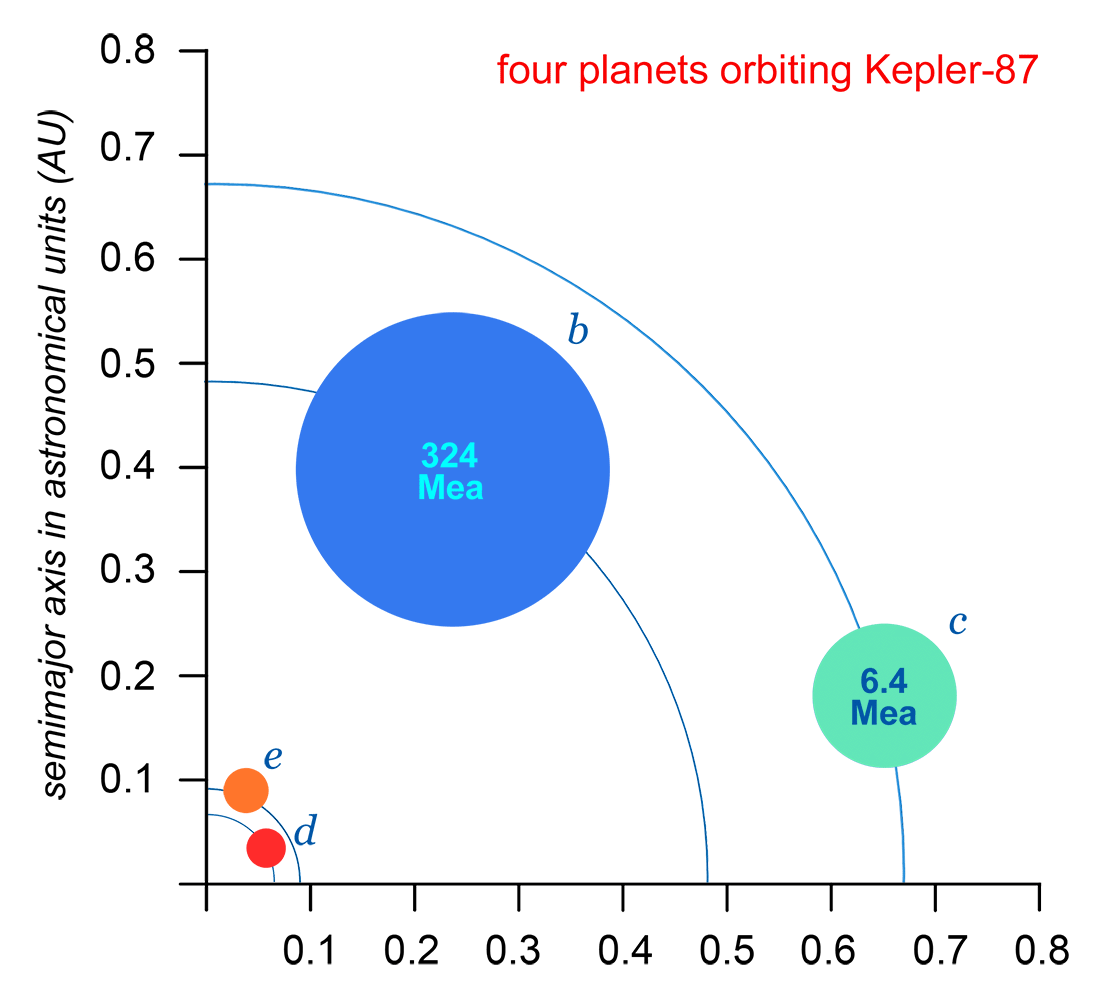
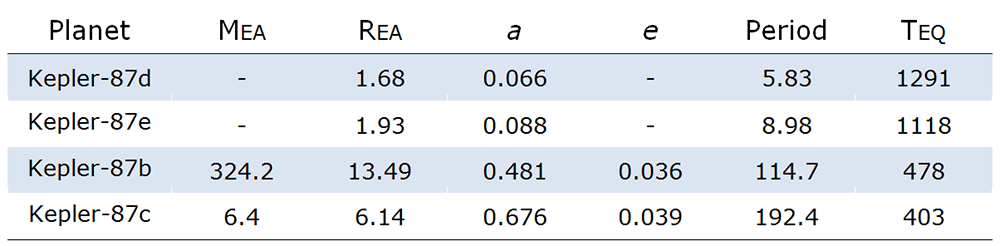
Kepler-87 is a sibling of Kepler-89. Again we see four planets, with one low-mass planet near 0.1 AU and another, smaller companion orbiting inside. In this system, however, neither of the inner planets (d, e) is large enough to accommodate a substantial hydrogen envelope. Both must be rocky Hellworlds. As in Kepler-89, the third planet is a gas giant, though it is much farther from the star and not engaged in a mean motion resonance. With a period of about 115 days, this planet (b) has a semimajor axis wider than Mercury’s. The fourth planet (c) is a puffy low-mass object with a semimajor axis within 10% of that of Venus.

Table 3. Kepler 87 system parameters
 
Column 2 gives the mass in Earth units; Column 3 gives the radius in Earth units; Column 4 gives the semimajor axis in astronomical units (AU); Column 5 gives the orbital eccentricity; Column 6 gives the period in days; and Column 7 gives an estimate of the equilibrium temperature (Teq) in Kelvin provided by the Kepler site.
. . . . . . . . . . . . . . .

Ofir and colleagues (2014) confirmed that the two outer planets experience TTVs, which permit calculation of their masses. They found that Kepler-87b is slightly more massive than Jupiter, as well as slightly larger. Kepler-87c, however, appears unusually puffy for its mass, which is only half that of Uranus. Although no RV studies have been attempted (and thus no competing data are involved), it is impossible not to consider these findings in light of Weiss and Marcy 2014. Perhaps the TTVs are providing a lower mass boundary rather than a precise figure.

As Ofir’s group observes, “The relatively high multiplicity of this system [is] notable against the general paucity of multiple systems in the presence of giant planets like Kepler-87 b.”

Figure 4. Kepler-90 system architecture (also known as KOI-351 / KIC 11442793)

In many ways, Kepler 90 is the most remarkable of this quartet of variegated systems, since it offers the jaw-dropping prospect of seven transiting planets within a period of 332 days. Still better, Kepler 90 presents diverse radii, from an Earth-size planet (c) to rivals of Saturn (g) and Jupiter (h). If only Pythagoras, or for that matter Johannes Kepler himself, could have glimpsed this array!

Table 4. Kepler 90 system parameters (also known as KOI-351 / KIC 11442793)

Column 3 gives the radius in Earth units; Column 4 gives the semimajor axis in astronomical units (AU); Column 5 gives the orbital period in days; and Column 6 gives an estimate of the equilibrium temperature (Teq) in Kelvin. All values were retrieved from the Kepler site in December 2013.
. . . . . . . . . . . . . . .

Yet we have no information on any of the planets’ masses, except for hints provided by radius and estimated equilibrium temperatures. Large TTVs have been reported for planet g, indicating strong gravitational interactions with planet h, but so far these data have not yielded any mass estimates for either planet (Cabrera et al. 2014). Nor have any RV studies been reported. Fortunately, the latest article by Jack Lissauer’s group offers the news that a detailed analysis of the system is in preparation by Eric Agol and colleagues. We’ll wait in anticipatory ignorance until it appears.

Meanwhile, we can contemplate the picture of a strange sibling to our own Solar System, with seven planets instead of eight, and all of them packed within a space equivalent to the Earth’s orbit around the Sun. The two candidate gas giants may be similar in mass to our own pair, but they are just as likely to be less massive. Cabrera and colleagues found that both planets would be dynamically stable as long as they follow circular orbits and are less than 5 Mjup. The same group also suggested that planet g is significantly less massive than planet h, perhaps close to Neptune's mass (Cabrera et al. 2014). Among the low-mass planets, the three largest (d, e, f) are almost certainly less massive than Uranus and Neptune, and the remaining two are probably similar in mass to Earth and Venus. Again we glimpse the presence of truly cosmic themes and variations.

Cabrera and colleagues explored the possibility that Kepler-90g has a moon, given some blips in the light curves, but they found this prospect unlikely. At least theoretically, the outermost planet, Kepler-90h, is capable of hosting a satellite system comparable to those of Jupiter and Saturn, as it is far enough from the host star to retain moons over the system’s lifetime. Any such moons, however, would be unlikely to sustain Earthlike conditions, even if they were big enough to sustain an atmosphere. The reason is that the host star is hotter, bigger, and more massive than our Sun (5994 K, 1.166 Rsol, 1.118 Msol), guaranteeing a thermal environment inconsistent with liquid water even under appropriate atmospheric pressure.  

. . . . . . . . . . . . . . .

The four systems discussed here call for a new look at theories of planet formation and secular evolution. All four systems are closely packed, and three out of four are co-planar, arguing against a history of planet scattering. Despite the current popularity of theories of in situ formation for low-mass planets, the close proximity of the gas giants to their low-mass companions in these systems is – as far as my limited understanding can tell me – inconsistent with in situ models. That leaves us with the now old-fashioned scenario of accretion followed by migration. I’m eager to see a big-picture analysis of multiplanet system architectures and their likely origins, something along the lines of the work by Edward Thommes a few years back (2008a, 2008b).

REFERENCES
Barros SCC, Díaz RF, Santerne A, Bruno G, Deleuil M, Almenara J-M, Bonomo AS, Bouchy F, Damiani C, Hébrard G, Montagnier G, Moutou C. (2014) SOPHIE velocimetry of Kepler transit candidates XI. KOI-142 c: first radial velocity confirmation of a non-transiting exoplanet discovered by transit timing. Astronomy & Astrophysics 561, L1. Abstract: http://adsabs.harvard.edu/abs/2014A%26A...561L...1B [Kepler-88] 
Cabrera J, Csizmadia S, Lehmann H, Dvorak R, Gandolfi D, Rauer H, Erikson A, Dreyer C, Eigmüller P, Hatzes A. (2014) The Planetary System to KIC 11442793: A Compact Analogue to the Solar System. Astrophysical Journal 781, 18. Abstract: http://adsabs.harvard.edu/abs/2013arXiv1310.6248C [Kepler-90] 
Goldreich P, Schlichting HE. (2014). Overstable librations can account for the paucity of mean motion resonances among exoplanet pairs. Astronomical Journal 147, 32. 
Lissauer JJ, Marcy GW, Bryson ST, Rowe JF, Jontof-Hutter D, Agol A, Borucki WJ, Carter JA, Ford EB, Gilliland RL, Kolbl R, Star KM, Steffen JH, Torres G. (2014) Validation of Kepler’s multiple planet candidates. II: Refined statistical framework and descriptions of systems of special interest. Astrophysical Journal, in press. Abstract: http://adsabs.harvard.edu/abs/2014arXiv1402.6534R. 
Masuda K, Hirano T, Taruya A, Nagasawa M, Suto Y. (2013) Characterization of the KOI-94 system with transit timing variation analysis: Implication for the planet-planet eclipse. Astrophysical Journal 778, 185. Abstract: http://adsabs.harvard.edu/abs/2013ApJ...778..185M [Kepler-89] 
Nesvorny D, Kipping D, Terrell D, Hartman J, Bakos GA, Buchhave LA. (2013) KOI-142, the king of transit variations, is a pair of planets near the 2:1 resonance. Astrophysical Journal 777, 3. Abstract: http://adsabs.harvard.edu/abs/2013ApJ...777....3N [Kepler-88] 
Ofir A, Dreizler S, Zechmeister M, Husser TO. (2014) An independent planet search in the Kepler dataset II. An extremely low-density super-Earth mass planet around Kepler-87. Astronomy & Astrophysics 561, A103. Abstract: http://adsabs.harvard.edu/abs/2013arXiv1310.2064O [Kepler-87] 
Pierens A, Nelson RP. (2008) Constraints on resonant-trapping for two planets embedded in a protoplanetary disc .Astronomy & Astrophysics 482, 333-340. 
Schmitt JR, Wang J, Fischer DA, Jek KJ, Moriarty JC, Boyajian TS, Megan E. Schwamb, Chris Lintott, Smith AS, Parrish M, Schawinski K, Lynn S, Simpson R, Omohundro M, Winarski T, Goodman SJ, Jebson T, Lacourse D. (2013) Planet Hunters VI: The first Kepler seven-planet candidate system and 13 other planet candidates from the Kepler archival data. Astrophysical Journal, in press. Abstract: http://adsabs.harvard.edu/abs/2013arXiv1310.5912S [Kepler-90] 
Thommes EW, Bryden G, Wu Y, Rasio FA. (2008a) From mean-motion resonances to scattered planets: Producing the Solar System, eccentric exoplanets and Late Heavy Bombardments. Astrophysical Journal 675, 1538-1548. Abstract. 
Thommes EW, Matsumura S, Rasio FA. (2008b) Gas disks to gas giants: Simulating the birth of planetary systems. Science 321, 814-817. Abstract; additional content. 
Weiss LM, Marcy GW, Rowe JF, Howard AW, Isaacson H, Fortney JJ, Miller N, Demory BO, Fischer DA, Adams ER, Dupree AK, Howell SB, Kolbl R, Johnson JA, Horch EP, Everett ME, Fabrycky DC, Seager S. (2013) The mass of KOI-94d and a relation for planet radius, mass, and incident flux. Astrophysical Journal 768, 14. Abstract: http://adsabs.harvard.edu/abs/2013ApJ...768...14W [Kepler-89] 
Weiss LM, Marcy GW. (2014) The mass-radius relation between 63 exoplanets smaller than 4 Earth radii. Astrophysical Journal Letters 783, L6. Abstract: http://arxiv.org/abs/1312.0936 
Wittenmyer RA, Simon J. O’Toole, H. R. A. Jones, C. G. Tinney, R. P. Butler, B. D. Carter, and J. Bailey. (2010) The frequency of low-mass exoplanets. II. The “Period Valley.” Astrophysical Journal, 722:1854–1863.